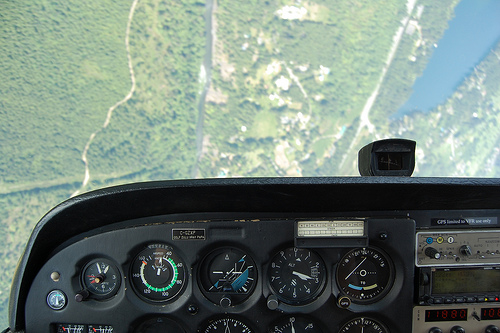
 Spin training is not for the squeamish or for the feint of heart. In fact, the AOPA ePilot newsletter recently recounted a 2006 incident involving a Cessna 152 where a flight instructor and her student were killed during spin training because the student may have frozen up at the controls while attempting a recovery. The plane had showed no signs of mechanical failure and had also been used on the same day for spin training without incident; however, it was reported that the student pilot had a history of panicky and impulsive behavior during stressful flying situations.
Hence, Tracy of the Around the Pattern blog mentions the incident in a long and well written post where he recounts the spin training that he received while in the United States Air Force (USAF). Although he received his training 35 years ago, Tracy can still recite the six basic recovery steps which are worth repeating here:
Throttles – Idle
Rudder and Ailerons – Neutral
Stick – Abruptly Full Aft and Hold
Rudder – Abruptly apply Full Rudder Opposite the Direction of the Spin and Hold
One Turn After Applying Opposite Rudder – Stick Abruptly Full Forward
Controls Neutral and recover from the Dive
His post then includes a more detailed discussion about the proper procedures under each of these steps and he also recalls how they would regain the attention of a student pilot in the Air Force (i.e. yelling, hitting the pilot on the head with a half-inch thick aircraft checklist, kinking the oxygen hose and finally the last resort: hitting the eject button).
The post is well worth a read and Tracy promises a follow-up post about how he found himself in an inverted spin with both engines shut off.
Hello,
I don
You'd probably need to speak to an instructor to get a proper answer to this. For a PPL, there is a minimum hours training requirement and you also need to be signed off by your instructor. I suspect that after 20-odd years, you'd probably take a few lessons to get back to the point you were at before; if only for your own reassurance and safety! 🙂